How Many Investment Loans Can You Have on the Northern Beaches: The Broker's Guide
Most property investors on the Northern Beaches start with one investment loan and a straightforward question: can I do this again? The answer is yes, but the number that is actually workable depends less on how many properties you want to own and more on how lenders read your income, your existing debt, and your position against the regulator's current limits.
There is no official ceiling on the number of investment loans you can hold. What there is, instead, is a set of serviceability and debt-to-income constraints that tighten with every loan you add. Some lenders hit their own internal limits at three properties; others are comfortable with ten or more if the numbers stack. Knowing which lenders sit where, and how to structure each loan so the next one stays possible, is where the difference between a two-property and a five-property portfolio is usually made.
Our team helps investors across the Northern Beaches structure and grow investment loan portfolios, comparing across 60+ lenders to find the right fit at each stage of the portfolio.
Key takeaways
- No legal cap exists on investment loans; servicing is the real limit.
- The APRA DTI cap tightens access once total debt exceeds six times income.
- Non-bank lenders are not subject to the APRA cap, widening portfolio options.
Is there a limit on how many investment loans you can have on the Northern Beaches?
There is no legal or government-set limit on how many investment loans an Australian investor can hold. The constraints are commercial: lenders assess each new loan against your full debt position, your income, and their own internal risk appetite, and those three factors together set the practical ceiling for your portfolio.
For most investors on the Northern Beaches, the binding constraint arrives well before any lender's internal property-count policy. It arrives when the debt-to-income ratio climbs past the threshold APRA monitors, or when the additional loan cannot be serviced at the assessment rate after all existing commitments are accounted for. The Northern Beaches property market makes this calculation tight: even the lowest house median on the approved list sits above $2,100,000, so each addition to a portfolio here carries significant debt.
How do lenders assess a growing investment portfolio?
Lenders assess each new investment loan as if the existing portfolio is already fully drawn and fully committed. Rental income from your existing properties is counted at around 80% of gross rent, and the holding costs for each property, including rates, insurance, body corporate fees and management fees, are added as separate commitments on top. The net effect is that a portfolio that looks profitable on paper often produces a much smaller serviceability surplus than an investor expects.
The assessment rate is the other pressure. APRA requires authorised deposit-taking institutions to assess serviceability at the actual rate plus a 3.0% buffer, which pushes the tested rate to roughly 9% on most current products. At that rate, each additional loan's repayment is materially higher in the lender's model than it will ever be in practice, which is why serviceability can fail on a loan that an investor can clearly afford to hold.
We see investors get stuck not because they've run out of equity, but because every lender they've approached is running the same serviceability model and getting the same result. The fix is almost never to wait - it's to find the lender whose policy reads the rental income and the holding costs differently.
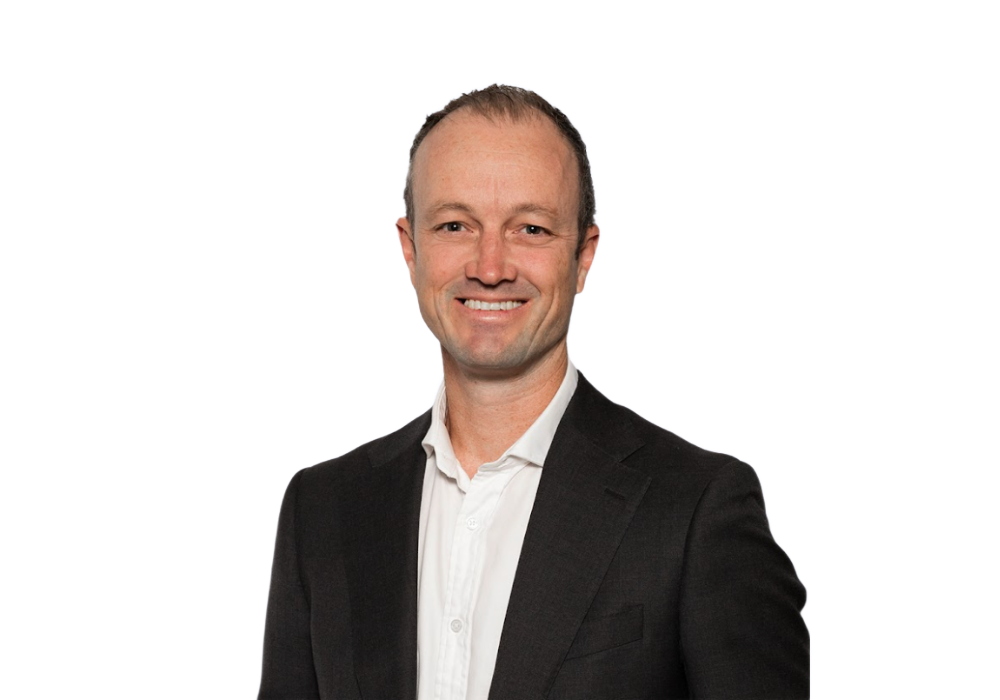
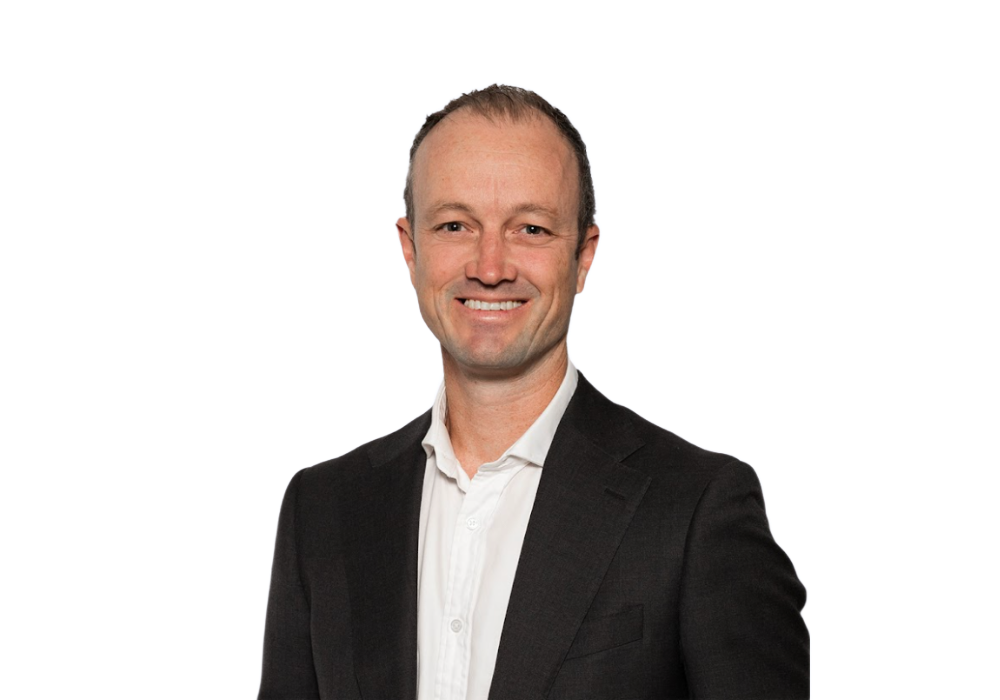
Damian Wallace · Director and Principal Broker, Mortgage Brokers Northern Beaches · Chat to Damian →
What is the APRA DTI cap and how does it affect investors on the Northern Beaches?
From 1 February 2026, APRA requires authorised deposit-taking institutions to limit new lending at a debt-to-income ratio of six times gross income or higher to no more than 20% of new loans written. Owner-occupier and investor pools are tracked separately, so a lender can exhaust its high-DTI investor quota before it exhausts its owner-occupier quota. When that happens, a lender that would ordinarily consider your application declines it - not because your situation has changed, but because of where the lender sits in its reporting cycle.
For Northern Beaches investors, the DTI cap bites early. A single investment property at a Northern Beaches median carries enough debt that a borrower on a good income can already be approaching a 4x or 5x DTI before the second loan is considered. The cap constrains new lending at 6x, which for most investors with an existing mortgage and one or two properties means the major banks become unavailable for the next purchase well before the portfolio would otherwise run out of serviceability room.
Non-bank lenders are not subject to the APRA DTI cap. They set their own debt-to-income policies and can write high-DTI loans where the income and rental position genuinely support the debt. The rate is typically higher than a bank product, but for an investor whose portfolio is stalled by the cap rather than by genuine serviceability, a non-bank lender can keep the strategy moving.
The options worth understanding:
- › Major bank (ADI): subject to APRA DTI cap · competitive rates · high-DTI quota can exhaust mid-cycle · strong serviceability model at approximately 9% assessment rate
- › Non-bank lender: not subject to APRA DTI cap · sets own policy · typically higher rate than bank · wider access for portfolios above 6x DTI
- › Specialist portfolio lender: designed for multiple-property investors · cross-portfolio assessment · narrower panel, only available through a broker with panel access
| Get in touch Need help with an investment loan? We're a local team who understand how lenders actually assess your situation, not just your rate. We'll compare your options across 60+ lenders to find the right fit.
|
What does it cost to add another investment property on the Northern Beaches?
The deposit requirement is the first constraint investors encounter. At 80% LVR, a second investment property carries a 20% deposit requirement, and on the Northern Beaches that means a substantial cash or equity contribution before the loan is written. CoreLogic data shows house medians across the approved suburb list ranging from around $2,130,000 in North Narrabeen to over $5,000,000 in Manly, with unit medians from around $960,000 in Dee Why to over $1,900,000 in Frenchs Forest. A 20% deposit on even the most accessible entry point is a significant equity draw.
Investors seeking to hold below 80% LVR on an investment loan generally face higher rates and, in most cases, lenders mortgage insurance. LMI on a 90% LVR investment loan on a $1,000,000 property runs to approximately $41,500, which is typically capitalised into the loan. Whether to pay LMI to preserve equity for the next property, or to wait until the equity position supports a clean 80% deposit, is one of the genuine trade-off decisions a growing portfolio forces.
Stamp duty applies in full to each investment purchase in New South Wales. First-home buyer duty concessions do not extend to investors, so the full transfer duty scale applies from the first dollar of the purchase price. No dollar figures for duty are held in MARKET DATA - the amount is purchase-price-specific - so route each calculation to a conveyancer or a broker for your exact position.
Whether it is better to keep each property at 80% LVR and preserve borrowing room for the next loan, or to take a higher LVR and preserve the cash for a deposit elsewhere, depends on the overall portfolio structure. For most Northern Beaches investors adding a third or fourth property, the standalone-loan-at-80% route keeps future lender options open. Cross-securing properties to avoid paying a deposit simplifies the application and removes almost every option you would want later.
What equity and deposit position affects:
- › LVR above 80%: LMI typically required; investment loan LMI around $41,500 on a $1,000,000 purchase at 90% LVR.
- › 80% LVR standalone: no LMI; each property secured separately; maximum future lender flexibility.
- › Cross-collateralisation: lender holds multiple securities; selling or refinancing one property requires consent on all; avoid where a growing portfolio is the goal.
- › Equity release via refinance: draws equity from an existing property as a deposit; keeps cash preserved; assessed as a new commitment on top of existing debt.
Source: CoreLogic (via YIP, mid-2026) and APRA.
When does holding multiple investment loans not make sense?
A growing portfolio has a compounding cost that most investors do not model fully until they are carrying three or four properties. Each additional loan adds holding costs, management complexity, vacancy risk and maintenance exposure. A vacant Northern Beaches investment property for two months in a year can represent a significant cash shortfall on a loan that was assessed at 80% of the expected gross rent. If the portfolio is negatively geared and the shortfall requires drawing from personal cash flow, the question of how many investment loans you can have becomes a question of how many you can sustain through a rough patch, not just how many you can borrow for.
The negative gearing rules are also changing. From 1 July 2027, net rental losses on established residential property purchased after 7:30pm AEST on 12 May 2026 can no longer be offset against salary or other non-property income. The losses are quarantined and carried forward against future property income or capital gains. This does not affect property held before that date, and new builds remain fully negative gearable. For an investor buying established property today with the intention of carrying a loss against salary income, the strategy stops working in less than twelve months. That is a material change to the economics of a negatively geared portfolio and it is worth modelling carefully before committing to additional established property.
Adding a property purely to use available equity, without a clear view of how the holding cost and the debt load affect the whole portfolio, is the position we most often see investors walk back from. If the rental income does not cover the holding costs and the strategy depends entirely on capital growth, the risk is concentrated in one outcome that is not within the investor's control.
How do you structure multiple investment loans to keep the next one possible?
Loan structure matters more on a growing portfolio than on a single investment property. Three decisions differ between lenders and directly affect whether a third or fourth loan remains accessible.
The decisions that matter across a growing portfolio:
- › How rental income is counted: some lenders take 80% of gross rent; others take a lower percentage or use an internal benchmark. On a three-property portfolio the difference between 70% and 80% rental shading can move your assessed income by enough to determine whether the next loan passes serviceability.
- › How cross-collateralisation is treated: some lenders require it on a growing portfolio; others allow each property to stand on a separate loan facility. Standalone loans keep future lender choice open and remove the consent requirement on every future property event.
- › How interest-only periods are assessed: investors on interest-only loans carry a lower monthly repayment during the IO period, but at rollover the loan reverts to principal and interest over the remaining term. A lender assessing a new loan looks at the eventual P&I repayment, not the current IO figure. That assessment can materially reduce serviceability for a later application.
Comparing across the panel at each stage of the portfolio finds which lenders read those three factors most favourably for your specific position - and which ones will close before the next purchase does.
Where I'd focus before adding a third or fourth property is the loan structure on the first two - specifically whether they're cross-secured and whether the IO terms create a repayment cliff that shows up in the next serviceability assessment. Those are the things I'd want resolved before the next application, not after.
Damian Wallace · Director and Principal Broker, Mortgage Brokers Northern Beaches · Chat to Damian →
How do you add another investment property on the Northern Beaches, step by step?
Step 1: Talk to us
We start by reviewing your full portfolio position - existing loans, rental income, equity and DTI ratio - to map out which lenders are realistically available for the next purchase and what structure gives the portfolio the most room to grow.
Step 2: Assess serviceability and equity access
We work through what the next loan does to your overall debt position, whether equity release from an existing property covers the deposit, and whether the assessed rental income supports the new loan at the lenders we are targeting.
Step 3: Match the lender to the portfolio stage and apply
We submit to the lender whose rental shading, DTI policy and cross-collateralisation position suit your specific portfolio structure, not the lender with the lowest advertised rate for a single investment loan.
Step 4: Manage approval through to settlement
We handle the lender's requirements during credit assessment, coordinate with your conveyancer and property manager, and confirm the loan structure is set up so the next purchase remains accessible after this one settles.
What goes wrong when investors try to scale past two properties?
Where portfolios stall:
- › Cross-collateralisation from the first loan: early portfolio decisions to cross-secure properties remove lender optionality at exactly the point the portfolio needs it most. Unwinding cross-collateralisation at refinance requires each property to carry enough equity to stand alone - and on the Northern Beaches, that usually means waiting for growth, not engineering a solution quickly.
- › Applying to the wrong lender first: a declined application from a lender near its high-DTI quota sits on the credit file for five years from the application date. Applying to the right lender in the right order matters on a portfolio more than on a single purchase.
- › IO rollover and the repayment cliff: investment loans on interest-only terms revert to principal and interest over the remaining loan term at rollover. A 30-year loan with five years IO repays the principal over 25 years, with a step-up in assessed repayment that can close serviceability on the next application before the investor has added another property.
- › Not modelling the negative gearing change: established property purchased after Budget night 2026 loses the ability to offset rental losses against salary income from 1 July 2027. An investor relying on that offset in their cash flow model needs to revisit the holding cost assumptions before the next purchase.
Frequently Asked Questions
Is there a maximum number of investment loans you can have in Australia?
No legal maximum exists. Lenders set their own internal portfolio limits, and serviceability and DTI constraints become the practical ceiling before any property-count policy does.
Does the APRA DTI cap apply to non-bank lenders?
No. The APRA debt-to-income cap applies to authorised deposit-taking institutions only. Non-bank lenders set their own DTI policies and can write loans above 6x DTI where the income and rental position support it.
Can I use equity from one investment property as a deposit on the next?
Yes. Equity accessed via a refinance or top-up on an existing property can be used as a deposit, though the equity release is assessed as an additional commitment in the serviceability calculation for the new loan.
Does negative gearing change affect existing investment properties?
No. Property held at 7:30pm AEST on 12 May 2026 is fully grandfathered and keeps negative gearing until it is sold. The restriction applies to established residential property purchased after that date, commencing 1 July 2027.
Is an interest-only or principal-and-interest loan better for an investment portfolio?
IO preserves cash flow during the IO period but creates a larger assessed repayment at rollover, which can close serviceability on the next application. For a growing portfolio, the IO term and its rollover timing need to be modelled across the whole portfolio, not just the individual loan.
Should I use a mortgage broker or go direct to a bank for a third investment loan?
A mortgage broker, every time. At a third loan, which lender's DTI policy, rental shading and cross-collateralisation position suits your portfolio structure is the decision that determines whether the loan gets written, and that comparison is only available across a panel, not at a single lender's branch.
Your Next Steps
Adding to an investment portfolio on the Northern Beaches is a structure question as much as a borrowing question. The right loan on the second property determines what is available on the third, and getting that sequence right is where a growing portfolio separates from a stalled one.
The right lender for your next investment loan depends on your full portfolio position, and that's a conversation worth having. Talk to the Mortgage Brokers Northern Beaches team or call 0403 316 686, and we'll compare your options across 60+ lenders.
|

External Resources
Mortgage Brokers Northern Beaches, Dee Why and the Northern Beaches. This is general information only - this article does not constitute financial advice. Please consider your own circumstances and seek professional advice before making any financial decisions.