How Much Do You Need to Earn to Buy on the Northern Beaches: What Lenders Actually Check

House prices on the Northern Beaches start at around $2.1 million and climb well past $5 million, so the income question is one almost every buyer here asks first. The honest answer is that it depends less on a single salary figure and more on how lenders read your specific income, your debts and your expenses together. Two buyers on the same gross income can come away with borrowing limits that differ by $200,000 or more, simply because one has a car loan and credit card limits the other does not.
What makes this market specific is the entry point. There are no houses in the approved suburb list that sit under the $1.5 million First Home Guarantee price cap. First-home stock here is almost entirely units, and even the cheapest of those, in Dee Why and Manly Vale, sit above $950,000. That shapes the income conversation before a lender runs a single number.
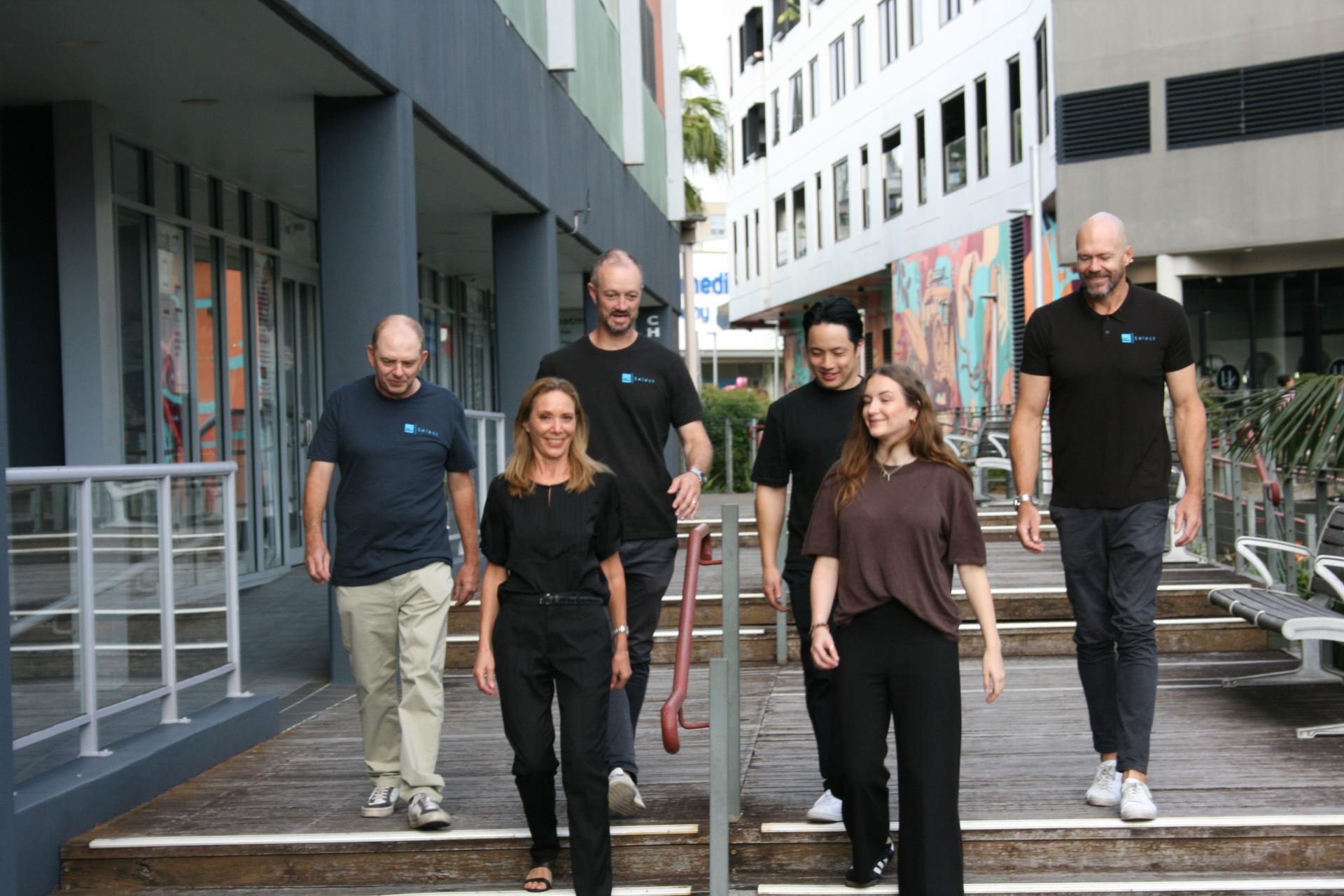
Our team works through home loan options with buyers across the Northern Beaches every week, comparing how each lender reads income, debts and expenses before you apply. The difference between lenders is often where the real answer lives.
Key takeaways
- No houses on the Northern Beaches sit under the $1.5 million scheme cap.
- Lenders assess income at a buffer rate near 9%, not your actual rate.
- Credit card limits reduce borrowing capacity even if the balance is zero.
What salary do you actually need to buy on the Northern Beaches?
There is no single income threshold, because borrowing capacity is calculated on after-commitment income, not gross pay. That said, for a unit in Dee Why at around $960,000 with a 10% deposit, a lender assesses whether your income can service a loan of roughly $865,000 at the APRA buffer rate of approximately 9%, not at the rate you would actually pay. At that assessment rate, a single income borrower needs to be well into six figures before a lender is comfortable, and most buyers here are couples combining two incomes to reach the entry point.
The entry-level unit figure is the most useful starting anchor for the Northern Beaches, because no house in any approved suburb sits under the $1.5 million First Home Guarantee price cap. For buyers looking at established houses at $2.1 million to $2.5 million in suburbs like North Narrabeen or Wheeler Heights, the income requirement moves substantially higher still.
How do lenders calculate what you can borrow on the Northern Beaches?
Lenders do not simply multiply your income by a set factor. They run a full serviceability assessment: your gross income goes in, then the APRA buffer of 3.0% is added to the actual loan rate to produce the assessment rate of approximately 9%, and your repayments are stress-tested at that higher figure. From there, they subtract your committed expenses, including any car loan repayments, personal loan repayments, and credit card limits assessed at roughly 3% to 3.8% of the limit per month, whether you carry a balance or not.
Living expenses are then benchmarked against the Household Expenditure Measure, a quarterly-updated floor set by the Melbourne Institute. If your declared expenses are lower than the benchmark, the lender substitutes the benchmark. You cannot declare low expenses to lift your capacity.
What remains is the income available to service the new loan. Two lenders applying the same rules to the same applicant regularly produce different outcomes, because they weight income types, living-expense benchmarks and credit card commitments differently.
Source: APRA.
"We see buyers come in having already paid down their credit card, assuming that fixes the problem. The card limit is what the lender counts, not the balance. Cancelling a card you don't use before you apply can move the number more than people expect."
Damian Wallace · Director and Principal Broker, Mortgage Brokers Northern Beaches · Chat to Damian →
What does it actually cost to buy on the Northern Beaches, and what deposit do you need?
With no houses under the First Home Guarantee cap and unit entry points starting around $960,000, a 20% deposit on the cheapest available unit in Dee Why sits at roughly $192,000, and that figure climbs sharply once you move to suburbs like Freshwater at $1,285,000 or Balgowlah at around $1,411,000 for units.
The three main deposit routes worth comparing:
- › 20% deposit, standard loan: no LMI · full lender choice · available across all suburbs · requires the largest upfront savings
- › 5% Deposit Scheme (First Home Guarantee): 5% deposit · no LMI · $1,500,000 price cap covers all 44 suburbs · first home buyers only since October 2025
- › Help to Buy (federal shared equity): 2% deposit · government takes up to 30% equity in an existing home · $1,300,000 Sydney price cap · income cap $100,000 single / $160,000 joint
- › Standard loan with LMI: 5% to 10% deposit · LMI premium added to the loan · no scheme price cap · open to all buyers
The $1,300,000 Help to Buy price cap is the one that bites hardest locally. Units in Freshwater, Newport, Queenscliff and Balgowlah all sit at or above that figure, which means Help to Buy effectively applies only to the cheapest units in Dee Why, Manly Vale, Narrabeen and Avalon Beach on the Northern Beaches.
Source: Housing Australia and firsthomebuyers.gov.au.
| Get in touch Need help buying on the Northern Beaches? We're a local team who understand how lenders actually assess your situation, not just your rate. We'll compare your options across 60+ lenders to find the right fit.
|
What lifts or cuts your borrowing capacity on the Northern Beaches?
Income level is only one side of the equation. The things that move your borrowing capacity in either direction are often ones buyers have not considered before the conversation.
What lenders look at beyond your salary:
- › Credit card limits: assessed at roughly 3% to 3.8% of the total limit per month, whether the balance is zero or not. A $20,000 limit cuts capacity by more than most buyers realise.
- › HECS/HELP debt: the annual repayment, not the balance, counts as a committed expense. It reduces the income available to service the loan.
- › Income type: permanent salary counts in full. Overtime, shift penalties and bonus income are typically shaded somewhere between 80% and 100% by most lenders, depending on how long the history runs.
- › Number of dependants: each additional dependant increases the living-expense benchmark a lender applies, which directly reduces the income available for repayments.
- › The APRA debt-to-income cap: since February 2026, banks may write no more than 20% of new lending at a debt-to-income ratio of six times gross income or higher. At Northern Beaches prices, this cap is the binding constraint for more buyers than the repayment test alone.
Source: APRA.
What government schemes can help buyers on the Northern Beaches?
New South Wales has no open state shared-equity scheme. The NSW Shared Equity Home Buyer Helper closed to new applicants on 30 June 2024 and is not available to new buyers. The live pathways are federal.
Federal schemes currently available:
- › First Home Guarantee (5% Deposit Scheme): 5% deposit, no LMI, no income test since October 2025. The Northern Beaches price cap is $1,500,000, which covers units across every approved suburb. No house in the list sits under the cap.
- › Family Home Guarantee: 2% deposit for single parents and single legal guardians. You do not need to be a first home buyer. The same $1,500,000 price cap applies here.
- › Help to Buy: the federal shared-equity scheme, launched December 2025. Income cap $100,000 single, $160,000 joint. Sydney price cap $1,300,000, which covers only the cheapest units locally. Available through CBA and Bank Australia.
- › First Home Owner Grant (NSW):$10,000 for new homes only, property value up to $750,000. No new builds on the Northern Beaches come close to that threshold, so in practice this grant does not apply here.
The honest position on the FHOG is that the $750,000 cap makes it unavailable to any buyer in any approved Northern Beaches suburb, new build or otherwise. The 5% Deposit Scheme is the scheme that does the work here.
Source: Housing Australia, firsthomebuyers.gov.au and Revenue NSW.
When does focusing on income alone not make sense here?
Income is the starting point, but buyers who focus only on earning more while ignoring their debt structure often find the number does not move the way they expected. Paying down a car loan before applying usually lifts capacity more efficiently than a modest salary increase, because the monthly commitment disappears from the assessment entirely rather than being shaded.
There are also buyers who are earning enough already but whose loan structure is working against them. A large unused credit card limit, two personal loans and a Buy Now Pay Later account can combine to cut $150,000 to $200,000 from what a lender will offer, even on a strong income. Tidying those before applying is often a faster path than waiting for a pay rise.
For most Northern Beaches buyers, the income question resolves into a structure and timing question once you run the numbers. If a single income makes entry-level units tight, combining with a partner or a guarantor arrangement is often the mechanism that closes the gap, not a higher salary alone.
"When someone asks what income they need, I usually ask what their current debts look like first. The buyers who clean up their commitments six months before applying often unlock more capacity than those who have simply waited for a raise. On the Northern Beaches at these prices, the difference between a clean application and a cluttered one is real."
Damian Wallace · Director and Principal Broker, Mortgage Brokers Northern Beaches · Chat to Damian →
How do you buy on the Northern Beaches, step by step?
Step 1: Talk to us
We start by mapping your income, debts and deposit against what lenders will actually assess, so you know your real position before you start making offers.
Step 2: Clean up commitments and confirm your deposit
We identify the debts and limits worth clearing before you apply, confirm which scheme or deposit route fits your situation, and verify your borrowing range across the lenders on our panel.
Step 3: Match you to the right lender and submit
We prepare and lodge your application with the lender whose income-assessment policy works best for your income type, whether that's salary, overtime, shift work or a combination.
Step 4: Through conditional approval to settlement
We manage valuation, conditions and lender correspondence through to formal approval, and stay alongside you to settlement so nothing falls over at the finish.
What approval challenges do buyers face on the Northern Beaches?
Where applications run into trouble:
- › The APRA DTI cap at Northern Beaches prices: at $1 million to $2.5 million purchase prices, debt-to-income ratios of six times or more are common even on strong incomes. Banks must cap new lending above that ratio at 20% of their book, so a lender near its quota in a given month may decline a file it would have approved earlier in the quarter. Non-bank lenders are not subject to the cap.
- › Variable income on a high purchase price: at a $2 million purchase, the gap between a lender that counts 80% of overtime and one that counts 100% can be the difference between approval and decline. The lender-choice decision is a borrowing-capacity decision.
- › Valuation shortfalls: lenders assess the lower of the contract price and their valuation. On waterfront, absolute-beachfront or properties with limited comparable sales, a valuation below contract is a real risk. The buyer covers the gap in cash or renegotiates.
- › Parental leave income: lenders vary on how they treat reduced parental leave pay. Some assess the return-to-work letter and the pre-leave income; others require the borrower to have returned. Policy differs and timing an application around parental leave is worth a conversation before you apply.
- › Applying to the wrong lender first: each declined application sits on your credit file for five years. On the Northern Beaches, where the DTI cap can make an application borderline at one bank and comfortable at a non-bank lender, applying without checking the panel first is the most avoidable error.
If your income situation is clean but the numbers are tight at your target price, a non-bank lender outside the DTI cap is often where the application that works actually lives. That is not a compromise, it is lender selection.
Frequently Asked Questions
What income do I need to buy a unit on the Northern Beaches?
It depends on your debts and deposit, but for a Dee Why unit near $960,000 with a 10% deposit, a single borrower generally needs gross income well above $120,000 to meet the APRA buffer assessment rate of approximately 9%. A second income changes that position significantly.
Does the First Home Guarantee help buyers on the Northern Beaches?
Yes, for units. The $1,500,000 price cap covers every approved suburb's unit market. No house in any approved suburb sits under the cap, so the scheme applies to units only on the Northern Beaches.
Does the Help to Buy scheme work here?
Only for the cheapest units. The Sydney price cap for Help to Buy is $1,300,000, which limits it to units in Dee Why, Manly Vale, Narrabeen and Avalon Beach. Units in Freshwater, Newport and Balgowlah sit at or above that figure.
Does a HECS debt affect how much I can borrow on the Northern Beaches?
Yes. Lenders treat the annual HECS repayment as a committed expense, not the outstanding balance. That repayment reduces the income available to service the loan and lowers borrowing capacity, sometimes by $50,000 to $80,000 at Northern Beaches price points.
Is a fixed or variable rate better when affordability is tight?
For buyers at the top of their borrowing range, a fixed rate locks repayments for a set period. The trade-off is losing offset flexibility, which matters if you are also trying to save. The right structure depends on your cash flow, not the rate alone.
Is a mortgage broker or a bank better for buyers on the Northern Beaches?
A mortgage broker, every time at these price points. The DTI cap means different banks exhaust their high-DTI quota at different times in a quarter, so which lender can write your loan changes month to month. A broker checks the panel; a single bank can only check itself.
Your Next Steps
Knowing how much you need to earn to buy on the Northern Beaches is the beginning, not the end. The income figure that matters is the one a lender will actually accept for your specific debts, income type and deposit, and that assessment differs meaningfully between lenders at these price levels. Cleaning up commitments before you apply and matching to the right lender upfront is where most buyers gain the most ground.
The next step is a conversation about where you actually stand. Contact the Mortgage Brokers Northern Beaches team or call 0403 316 686. We'll compare your position across 60+ lenders and find the most suitable options for your circumstances.
|

External Resources
Mortgage Brokers Northern Beaches, Dee Why and the Northern Beaches. This is general information only - this article does not constitute financial advice. Please consider your own circumstances and seek professional advice before making any financial decisions.